Tile roofs almost always fail at the mortar, not the tiles
A concrete or terracotta tile will outlast the person who laid it. What does not last is the mortar holding the ridge capping on, and that is where the overwhelming majority of tile roof problems start. The bedding is the mortar bed underneath the cap. The pointing is the flexible compound over the top of it. When the pointing cracks, water gets into the bedding, the bedding breaks down, and the caps start to move.
The other common failures are mechanical rather than material. Tiles slip out of line when the nib breaks or the batten behind them softens. Tiles crack from foot traffic, usually from someone walking a roof in the wrong place, and antenna and solar installers are responsible for a fair share of what we replace. And valley irons rust out underneath the tiles either side of them, which is a repair that involves lifting tiles to get at.
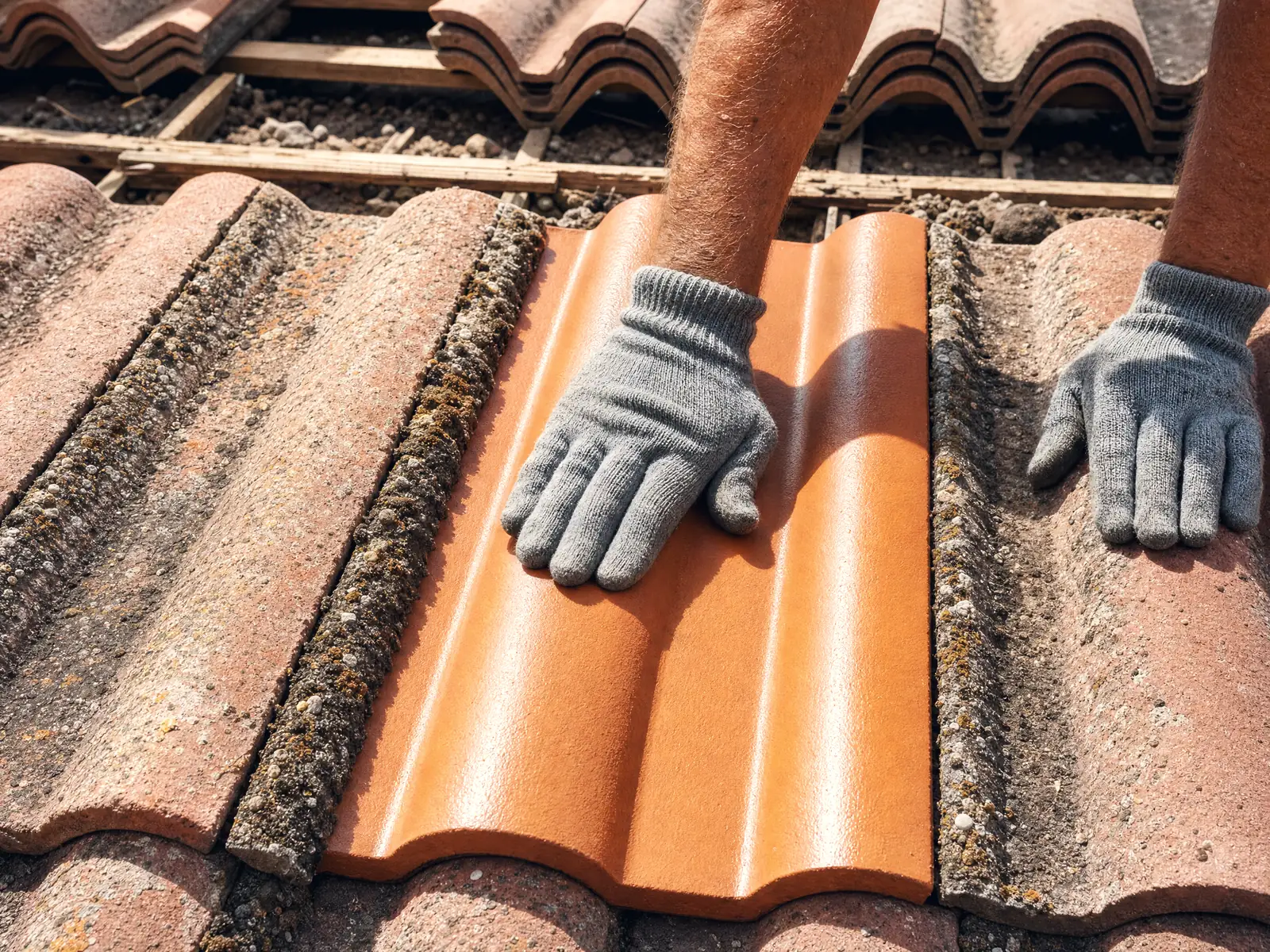
How we do it
Identify the tile profile
Concrete or terracotta, and which profile. This decides whether a matching tile can be bought or has to be found.
Check the bedding mortar
Lifting a cap tells you whether this is a re-point or a full re-bed. The two are very different jobs and prices.
Source matching tiles
Discontinued profiles come from salvage. A mismatched tile is visible from the street for the life of the roof.
Replace tiles and re-bed
Broken tiles swapped, caps re-bedded where the mortar has gone, then flexible pointing over the top.
Photograph the work
Before and after, from the roof, so you can see work you are never going to climb up and inspect yourself.
Tile repairs are the right call when
- A handful of tiles are cracked or have slipped out of line
- One section of ridge capping has failed rather than the whole roof
- A valley iron has rusted but the tiles either side are sound
- Storm damage has taken tiles off an otherwise healthy roof
- You have had solar, an antenna or an aircon unit installed and tiles were broken doing it
You are past a repair when
- Pointing is cracked along the full length of every ridge and hip
- Tiles are delaminating, flaking or breaking when walked on
- The surface is porous enough that the tiles darken and stay wet for days
- Battens or sarking have rotted underneath
The first of those is a restoration, which includes re-bedding and re-pointing the lot. The last one is a replacement, and no amount of tile work fixes it.
What do tile roof repairs cost?
Replacing a few cracked tiles is a low-hundreds job for most single-storey homes, and much of that is the cost of getting someone safely onto the roof rather than the tiles themselves. That is why it is worth bundling small tile work with anything else the roof needs rather than calling someone out twice.
Re-pointing is priced by the metre of ridge and hip. Re-bedding, which means removing the caps and rebuilding the mortar bed underneath before re-pointing, costs substantially more because it is genuinely more work. Any quote for ridge capping should say which of the two it is, and a quote that just says re-pointing at a price well below the others is often re-pointing over failed bedding, which will crack again.
Terracotta generally costs more to repair than concrete, both because the tiles cost more and because matching an old glaze is harder. Sourcing second-hand tiles for a discontinued profile adds time and sometimes cost, and we would rather do that than put an obviously different tile on your roof.
Common questions
What is the difference between re-pointing and re-bedding?
Bedding is the mortar bed underneath the ridge caps that holds them in place. Pointing is the flexible compound applied over the top of that bed. Re-pointing renews the surface layer. Re-bedding removes the caps and rebuilds the mortar underneath first. If the bedding has failed, pointing over it will crack again fairly quickly.
Can you match my old roof tiles?
Usually. Current profiles are straightforward to buy. Older and discontinued ones come from salvage yards, which takes a bit longer. We would rather spend the time finding a match than put a tile on that is visible from the street for the next thirty years.
Why do my ridge caps keep cracking?
Almost always because rigid cement mortar was used for the pointing instead of a flexible compound. A roof moves with heat, and rigid mortar cannot, so it cracks again in the first hot summer. Flexible pointing is designed to move with it.
Someone walked on my roof and broke tiles. Is that normal?
It is common, and it is avoidable. Tiles are walked in specific places for a reason. Solar, antenna and aircon installers break a lot of tiles, and often nobody notices until it leaks months later. If someone has been on your roof recently and you now have a leak, that is the first place to look.
Is terracotta harder to repair than concrete?
Slightly. The tiles cost more, older glazes are harder to match, and terracotta is more brittle to work around. None of it is a problem, it just means the job takes a bit more care and usually costs a bit more.
Related services
Pressure clean, re-bed and re-point the ridge capping, replace broken tiles, then a coating system. Typically buys another 10 to 15 years out of a sound tile roof.
Learn moreSlipped and cracked tiles, failed pointing, rusted valley irons and flashing. We find what is actually causing the problem rather than patching the wet patch.
Learn morePressure cleaning to strip moss, lichen and years of grime. Often the first step of a restoration, and sometimes all a roof actually needs.
Learn more
Thinking about tile roof repairs?
We will come and look at the roof, photograph what we find and put a price in writing. Free, across Newcastle, Lake Macquarie and the Hunter.