· 5 min read
A roof rarely fails suddenly. It gives you warning, usually for a year or two, and the warning is nearly always cheaper to act on than the leak it turns into. The difficulty is that the signs are boring, they are on a surface you never look at, and none of them feel urgent until one does.
The ones worth acting on now
These are the ones where waiting costs more than acting, because each of them is already letting water somewhere it should not be.
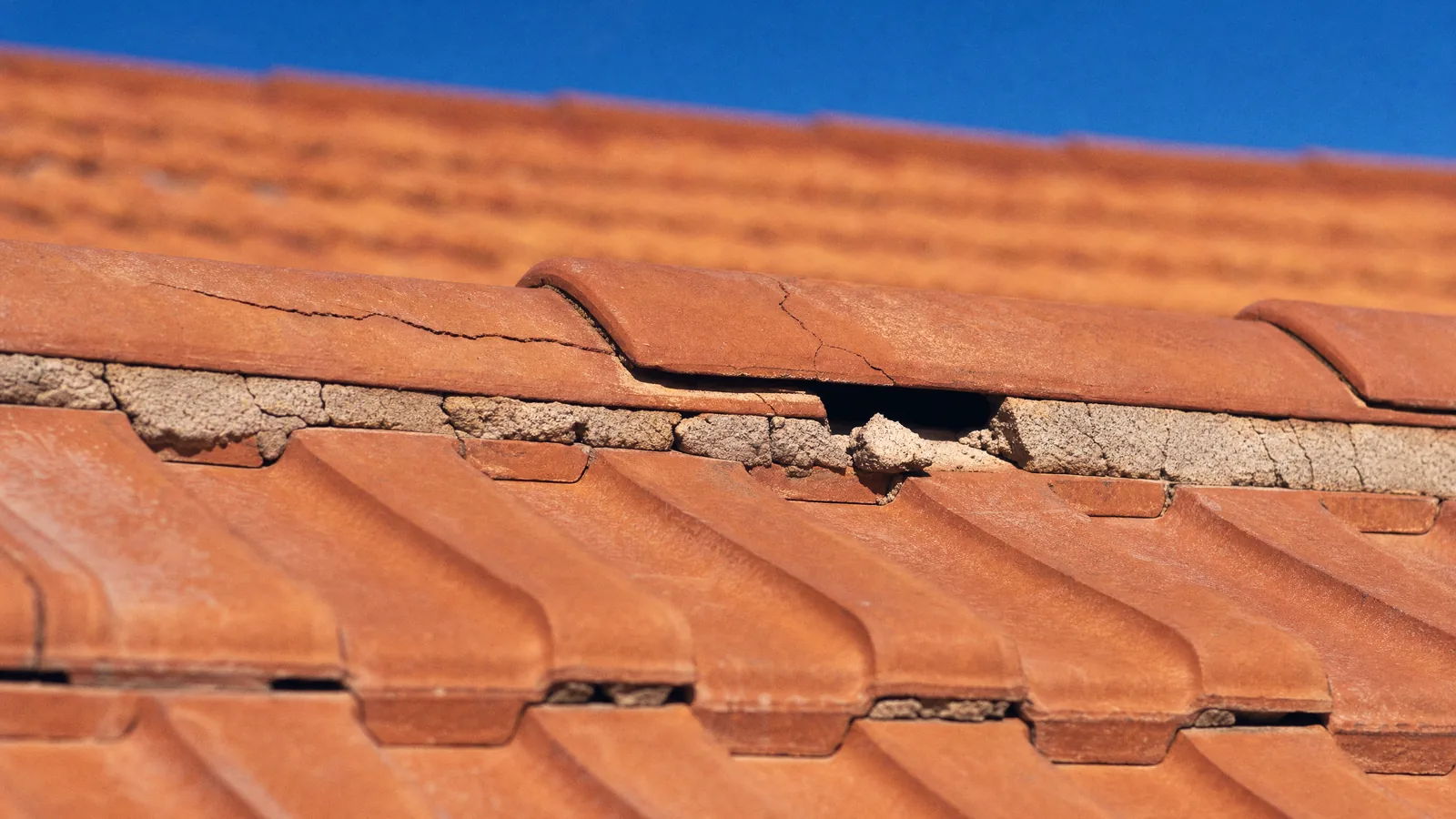
- Cracked pointing along the ridges and hips. On a roof over about forty years old this is close to universal. The tiles are fine; the mortar holding the caps on is not, and once water gets into the bed underneath the caps start to move.
- Tiles out of line. A slipped tile has usually lost its nib, or the batten behind it has softened. Either way there is a gap where there should not be one, and it will not correct itself.
- Rust marks in a valley. The valley iron sits under the tiles either side, so by the time you can see rust from the ground it has been going a while. This is the repair most likely to have already caused damage you cannot see.
- Anything on the ceiling. A stain, a bubble in the paint, a patch that looks slightly wrong in a particular light.
Ceilings do not stain for interesting reasons.
The ones that can wait for a booking
None of these are nothing. They are all cheaper to deal with early. But they are a booking rather than a phone call tonight.
- A chalky or faded surface. Age rather than failure, and on a tile roof it means the surface is going porous. Cheapest to address before it starts letting water through.
- Moss and lichen on the southern faces. Common on shaded roofs across Lake Macquarie and it looks worse than it is, though it does hold moisture against the tile and shortens the life of what is underneath.
- Gutters that need clearing. Annoying rather than dangerous, unless they are blocked enough that water is backing up under the bottom row of tiles, which is a surprisingly common cause of what gets diagnosed as a roof leak.
When there are no signs at all
The most expensive roofs we see are the ones that never showed anything. That is particularly true of metal roofs on the coast, where corrosion starts at the fasteners, the cut edges and the laps, all of which are invisible from the ground. A Stockton or Swansea roof can look completely presentable from the street while the screws holding it down have effectively gone.
It is also true of tile roofs where the problem is under the tiles rather than on them. Rotten battens and wet sarking produce no visible symptom until something gives, and by that point restoration is no longer an option.
This is the honest argument for having a roof looked at on a cycle rather than on a symptom. Not because something is always wrong, but because the things that are cheap to fix are the things you cannot see.
The most expensive roofs we see are the ones that never showed anything.